
 Top rated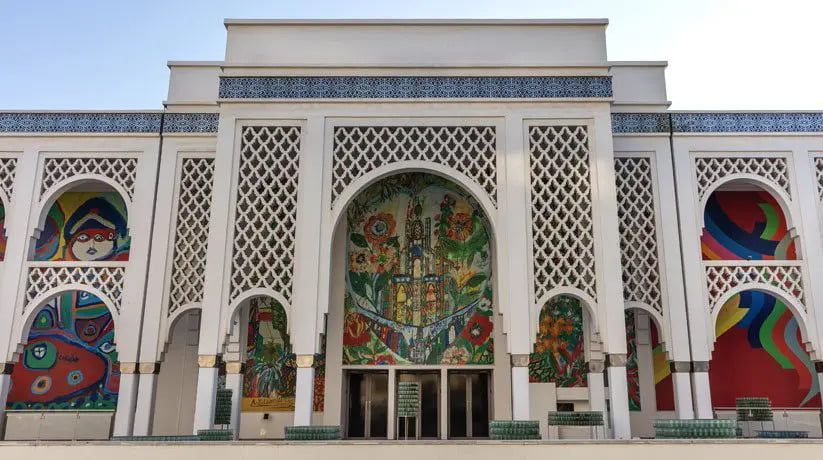
Culture · Heritage · UNESCO
Morocco Museums & Galleries: 13 Must-Visit Cultural Sites
Private Morocco travel
Morocco's museums and galleries are where the country's layered history actually lives — Roman bronzes from Volubilis, hand-cut zellige from the Saadian dynasty, Berber jewelry from the Atlas, Yves Saint Laurent's sketches from his Marrakech years. This guide covers 13 of Morocco's most important cultural institutions across six cities, what to see in each, and how to fit them into a Morocco tour with Gateway2Morocco.
Why it mattersA Country You Can Read in Its Museums
Morocco doesn't keep its history behind glass — most of it is still lived in. But the country's museums and galleries are where you go to see the things not still in daily use: the silver Berber jewelry of the high Atlas, the wooden carvings of medieval Fes, the photographs of pre-colonial Tangier, the Roman mosaics from Volubilis, and the personal effects of Yves Saint Laurent, who fell in love with Marrakech in 1966 and never really left.
This guide covers 13 of Morocco's most important cultural institutions across six cities — Rabat, Marrakech, Fes, Meknes, Safi, and Tangier. Each entry tells you what the museum is, what to see, and which Gateway2Morocco tour itinerary it fits into. Most are open year-round, charge modest entry (20–80 MAD), and are best visited in the morning before tour groups arrive. A few — like the YSL Museum — require advance online booking.
Capital cultureRabat — Where Tradition Meets Modern Art
A booming metropolis balancing royal heritage with contemporary culture.
Mohammed VI Museum of Modern & Contemporary Art
Morocco's first museum dedicated entirely to modern and contemporary art — a striking white-and-zellige building in Rabat's Ville Nouvelle. The permanent collection traces Moroccan modern art from the early 20th century to today, with works by Mohamed Melehi, Jilali Gharbaoui, Farid Belkahia and other founders of the modern Moroccan movement. The museum also hosts world-class traveling exhibitions — including a celebrated Giacometti retrospective in 2016 and major shows of Picasso, Goya, and contemporary African artists.
- Founders of Moroccan Modernism (Melehi, Belkahia, Cherkaoui)
- Rotating international exhibitions (book ahead)
- Striking modern architecture with zellige accents
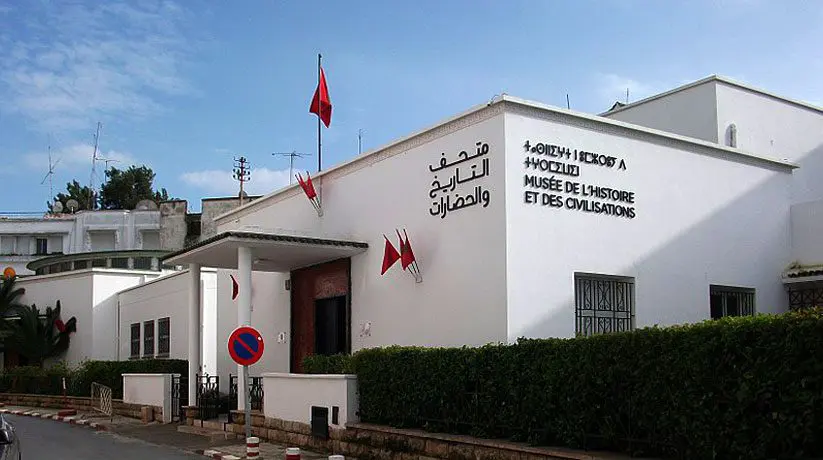
Museum of History and Civilization
The Museum of History and Civilization (formerly the Archaeological Museum) tells the story of Morocco from prehistory through the Islamic conquest. The collections come from the country's three great Roman sites — Volubilis, Banasa, and Thamusida — and include the famous bronze busts of Cato the Younger and Juba II, plus the bronze "Dog of Volubilis". One of Morocco's most underrated museums and the perfect prelude to actually visiting Volubilis itself on an Imperial Cities tour.
- Bronze head of Juba II — Morocco's most famous antiquity
- Mosaics & sculptures from Volubilis
- Prehistoric stone tools & early Islamic ceramics
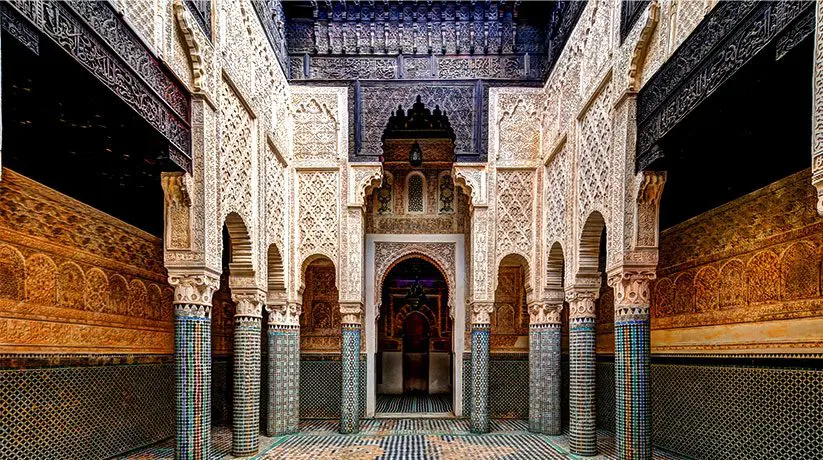
The Merinid Medersa of Salé
Just across the Bou Regreg river from Rabat, the medersa of Salé is one of the most exquisite surviving examples of Merinid Islamic architecture (1244–1465) — the dynasty that perfected the medersa form. Built in 1341 as a school for visiting scholars, its central courtyard combines carved cedar, sculpted stucco and zellige tilework with extraordinary precision. It functions today as an architectural and historical museum, with a small climb to the rooftop offering one of the best views in Rabat-Salé.
- Original 14th-century cedar carvings & zellige
- Rooftop view over the Bou Regreg estuary
- Quieter than the medersas of Fes — easier to photograph
Red CityMarrakech — Three Essential Cultural Sites
A Saadian palace, a Berber treasure-house, and one of the world's most photographed museums of fashion.
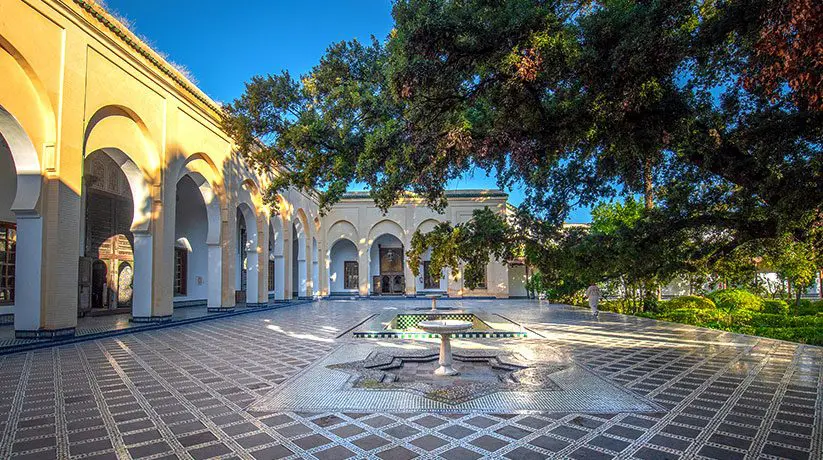
Bahia Palace
Built in the 1860s and expanded by Grand Vizier Si Moussa and his son Ba Ahmed, Bahia Palace ("The Brilliant") is the most stunning example of 19th-century Moroccan craftsmanship still standing. Eight hectares of carved cedar ceilings, lacework stucco, zellige tilework and tranquil courtyards filled with orange trees — built to be the most beautiful palace of its time and arguably still is. Not a museum in the traditional sense, but a living brochure of Moroccan-Andalusian architecture. Essential on any first visit to Marrakech.
- The Grand Courtyard (Cour d'Honneur) zellige floor
- The 80 m² painted cedar ceiling of the Petit Riad
- Allow 60–90 minutes; arrive early to avoid crowds
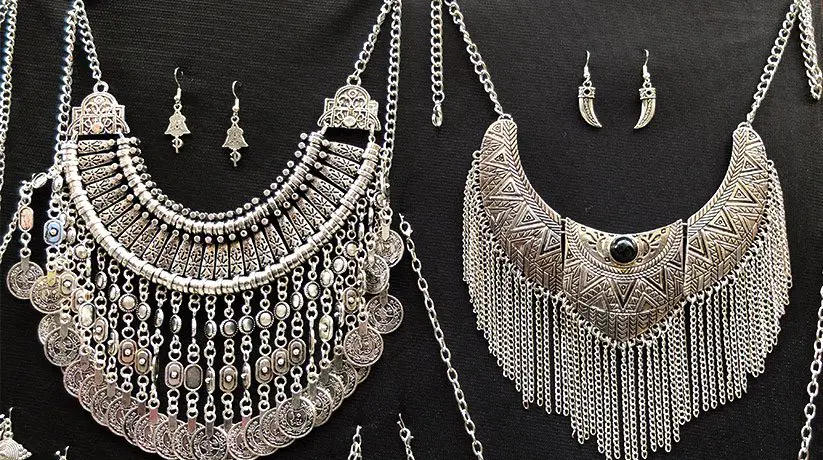
Berber Museum (Musée Berbère)
Housed inside the cobalt-blue walls of the Jardin Majorelle — Yves Saint Laurent and Pierre Bergé's former garden — this small but stunning museum displays over 600 artifacts of Amazigh (Berber) culture: silver jewelry, daggers, fibulae, ceremonial costumes, musical instruments, ceramics and carpets gathered from across the Rif, Atlas and Sahara. The dimly-lit central room — its silver pieces lit like jewels in a vault — is one of the most atmospheric museum experiences in Morocco.
- Silver fibulae & ceremonial Berber jewelry
- Mountain carpets & Sahara nomad textiles
- Ticket bundle with Jardin Majorelle + YSL Museum
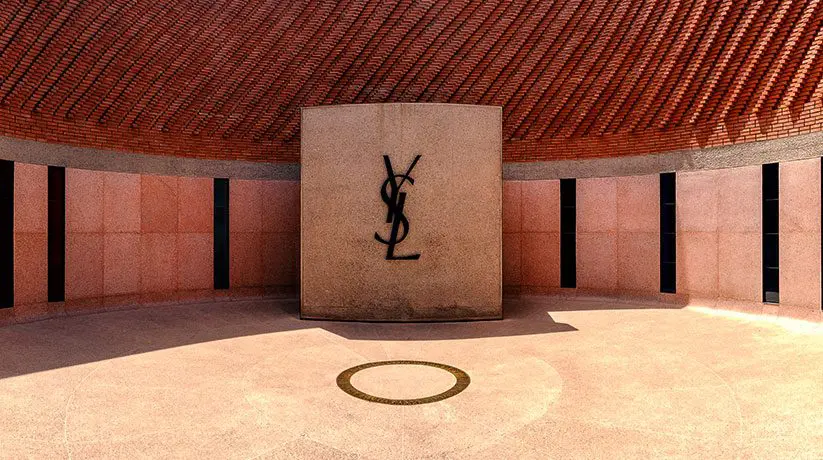
Yves Saint Laurent Museum (mYSLm)
Designed by Studio KO, the YSL Museum is one of the most architecturally celebrated buildings in modern Marrakech — a sculptural brick exterior referencing the warp and weft of fabric. Inside, 4,000 m² houses a rotating selection of 5,000 garments, 15,000 accessories and 50,000 drawings from Saint Laurent's career. The 400-piece permanent gallery is a tribute to his obsession with Morocco — many of his most famous collections were designed at his Marrakech home, the Villa Oasis next door. Online booking essential in peak season.
- Permanent exhibition of YSL's most iconic dresses
- Stunning Studio KO architecture
- Bookshop with rare YSL editions; café on site
Master craftsFes — Three Museums Inside the Oldest Medina on Earth
Where Morocco's master craftsmen — woodworkers, weavers, jewellers — have worked for over a thousand years.
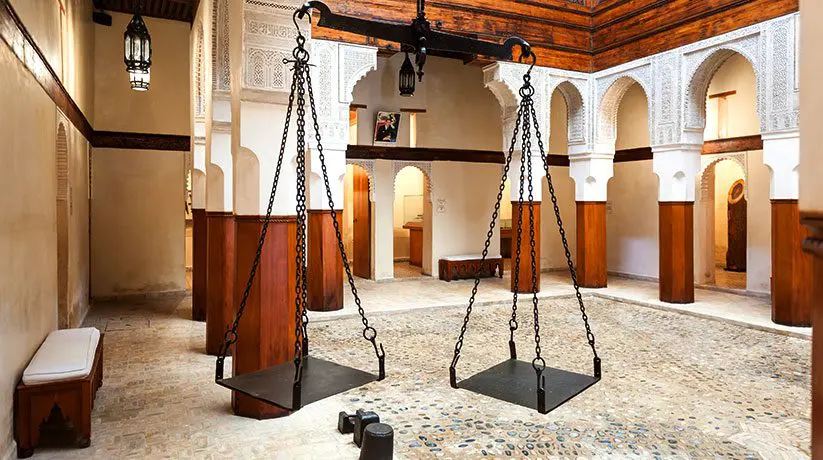
Nejjarine Museum of Wooden Arts & Crafts
Housed in a magnificently restored 18th-century fondouk (caravanserai) — itself listed by UNESCO — the Nejjarine Museum displays one of the finest collections of Moroccan woodwork anywhere: carpenters' tools, oil chests, musical instruments (ouds, rebabs), Koran stands, prayer rosaries, hand-carved doors and even old weapons with inlaid stocks. The building itself — three storeys of carved cedar around an open courtyard with a marble fountain — is half the experience. Don't miss the rooftop café with one of the best 360° views of the Fes medina.
- 3-storey restored fondouk (UNESCO-listed)
- Hand-carved musical instruments & Koran stands
- Rooftop terrace with panoramic medina view
Batha Museum (Musée Dar Batha)
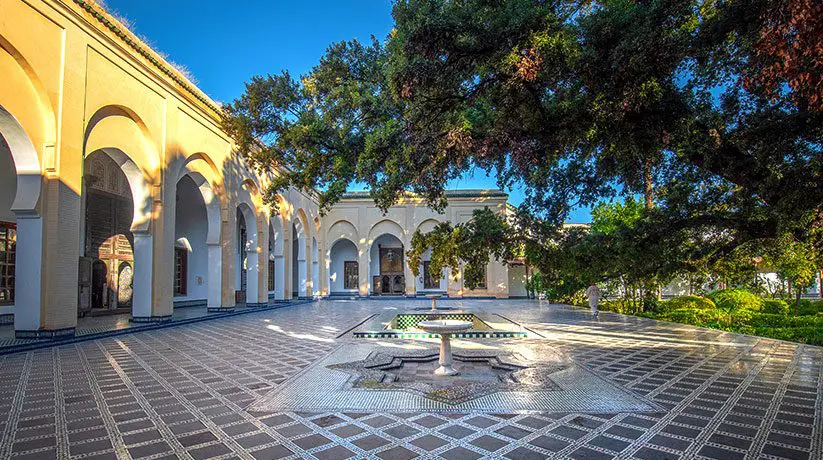
Built as a royal summer palace by Sultan Moulay Hassan in the late 19th century, the Batha was converted into Morocco's first museum of traditional Moroccan art in 1915. Its rooms contain the country's finest collection of Fassi ceramics — the famous cobalt-blue Fes pottery — alongside carved wood, embroidery, textiles, ironwork, jewelry and astrolabes. The Andalusian-style central garden, with its giant Barbary oak, is one of the most peaceful spots in Fes. Also hosts the annual Fes Festival of World Sacred Music concerts in June.
- World's finest collection of Fassi blue pottery
- Andalusian garden with massive heritage oak
- June: open-air sacred music festival concerts
Dar Belghazi Museum
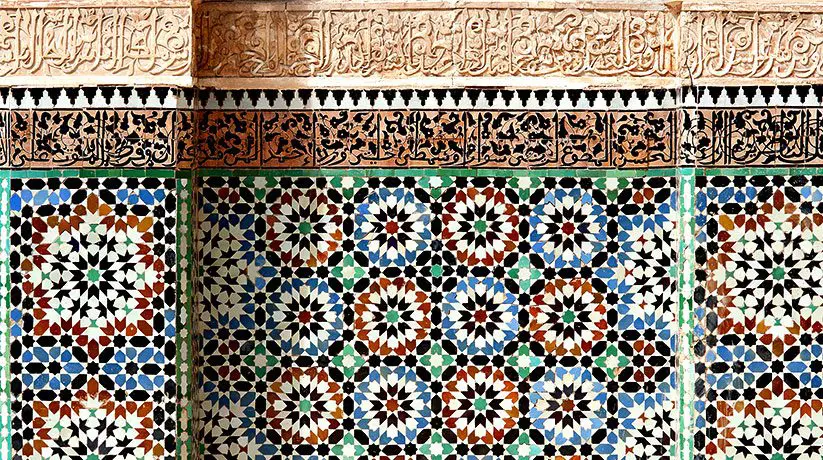
A private museum founded by the Belghazi family — a noted Fassi clan of collectors and antiquarians. Three floors of 17th-century Moroccan decorative arts: Berber and Arab jewelry, embroidered textiles from Fes and Tetouan, illuminated Korans, ceramic ware, ornate weapons, hand-carved wooden chests and even a complete reconstructed traditional bridal room. Best visited with a Gateway2Morocco guide — the private context adds tremendously to the experience.
- 17th-century jewelry & ceremonial costumes
- Illuminated Korans & manuscripts
- Complete reconstructed Fassi bridal room
Imperial cityMeknes — Inside a Grand Vizier's Palace
Sultan Moulay Ismail's 17th-century imperial city, with the finest small museum of Moroccan arts.
Dar Jamaï Museum
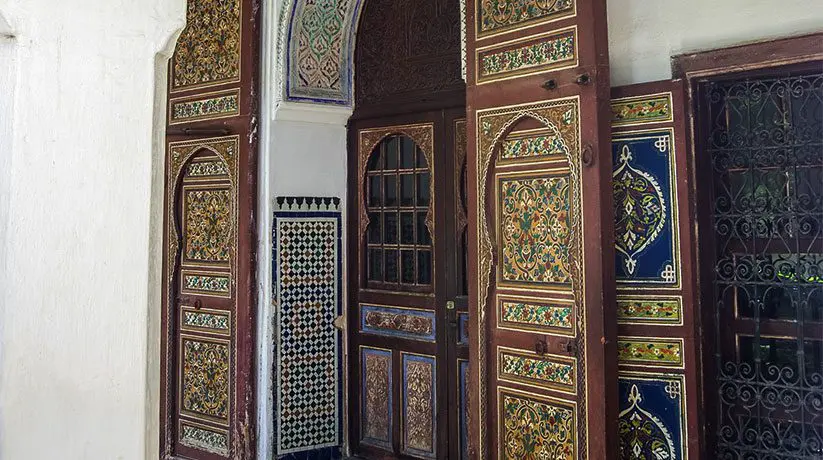
Built in 1882 by the powerful Jamaï family — grand viziers to Sultan Moulay Hassan I — this restored palace is now Meknes's principal museum of traditional Moroccan arts. Six rooms surround a peaceful Andalusian garden of orange and lemon trees, displaying Meknassi ceramics, embroidered textiles, brass and copperware, decorated leather, carpets and traditional musical instruments. Often paired with a visit to Volubilis on Imperial Cities itineraries.
- Meknassi ceramics & brass work
- Original Andalusian palace gardens
- 15-minute walk from Bab Mansour main gate
Ceramic heartSafi — Where Morocco's Pottery Comes From
A working potters' city for over 500 years — and the home of the National Museum of Ceramics.
National Museum of Ceramics
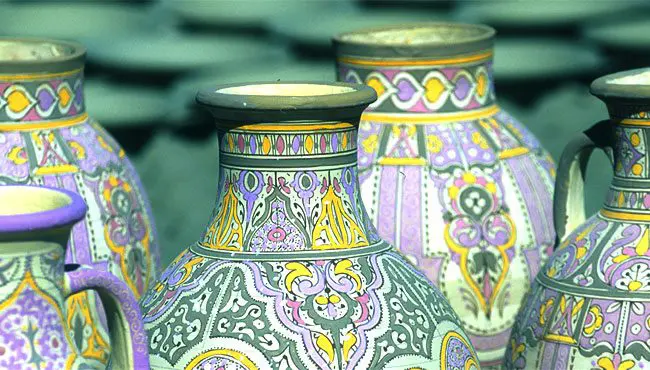
Set inside the 16th-century Portuguese fortress (the Kechla) overlooking Safi's harbour, this national museum tells the story of Moroccan pottery and ceramics from prehistoric times to today. Displays cover the cobalt-blue ware of Fes, the green-glazed pieces of Meknes, and Safi's own distinctive polychrome with metallic lustre — a technique passed through the same workshops for half a millennium. Pair the visit with a walk up the famous Potters' Hill (Colline des Potiers) just outside the medina.
- Cobalt-blue Fes ware & green-glazed Meknes pieces
- Safi's signature polychrome with metallic lustre
- Combine with Potters' Hill working workshops
Where worlds meetTangier — Phoenicians, Romans, and the View Across Gibraltar
Where Africa meets Europe — and the museum sits in the old Sultan's palace.
Kasbah Museum of Mediterranean Cultures
Housed in the Dar el-Makhzen — the former sultan's palace at the highest point of the Tangier Kasbah — this museum traces Tangier's long history as the meeting point of African, European, Phoenician, Carthaginian and Roman worlds. The collection includes Phoenician trading artifacts, a stunning Roman mosaic of the journey of Venus from the ancient city of Volubilis, Carthaginian pottery and Andalusian-era textiles. From the kasbah ramparts just outside, you can see Spain on a clear day.
- Roman "Journey of Venus" mosaic from Volubilis
- Phoenician & Carthaginian trading artifacts
- Kasbah ramparts views of Gibraltar & Spain
4.9 ★
TripAdvisor rating
300+
Traveler reviews
100%
Private departures
Visit smartPractical Tips for Visiting Moroccan Museums
Most museums open 9–10 AM and close 5–6 PM, and many close one day a week (often Tuesday or Monday) and during major religious holidays — always confirm 24 hours ahead, especially during Ramadan. Entry is typically 20–80 MAD (about $2–8 USD); the YSL Museum requires online booking in peak season, and the Berber Museum offers a combo ticket with Majorelle and YSL. Personal photos without flash are usually allowed, though tripods, professional gear and video typically require permission or a fee, and the Mohammed VI Museum is stricter than most.
Cover shoulders and knees, especially in palace-museums and religious-context sites like medersas, and wear comfortable walking shoes since most museums involve stairs and courtyards. Plan 60–90 minutes for major museums (Mohammed VI, YSL, Bahia Palace) and 30–45 minutes for smaller ones (Berber Museum, Dar Jamaï) — the Nejjarine rooftop café is a beautiful pause point. Most museums have minimal English signage, so a licensed Gateway2Morocco guide, included in every city, adds enormous context briefed on your specific interests.
Good to knowFAQs
What is the best museum in Morocco?+
It depends on your interests. For modern and contemporary art, the Mohammed VI Museum in Rabat is unmatched. For fashion and design, the YSL Museum in Marrakech is one of the world's best. For Berber heritage, the small but exquisite Berber Museum inside Jardin Majorelle. For traditional Moroccan craftsmanship, the Nejjarine in Fes (UNESCO-listed) or the Batha Museum, also in Fes.
Do I need to book Moroccan museums in advance?+
For most museums, no — you can buy tickets at the door. The exception is the Yves Saint Laurent Museum in Marrakech, which often sells out in peak season (October–April); book online via the official mYSLm site. Combo tickets for Jardin Majorelle, Berber Museum and YSL Museum are the best value for the cultural triple-header.
How much does museum entry cost in Morocco?+
Entry fees range from 20 MAD (about $2 USD) for smaller museums like the Médersa of Salé or Dar Jamaï up to 200 MAD (about $20 USD) for the YSL Museum. The Mohammed VI in Rabat charges around 60 MAD, Bahia Palace 70 MAD, Nejjarine 30 MAD. Bring cash — most ticket offices don't accept cards.
Are Moroccan museums open on weekends and holidays?+
Most museums are open on weekends but close one day a week — usually Monday or Tuesday. They also close on major Moroccan religious holidays (Eid al-Fitr, Eid al-Adha, Mouloud) and during the first week of Ramadan. Always confirm the day before. Gateway2Morocco guides know the current closure days for every museum on your itinerary.
Can I take photos inside Moroccan museums?+
Yes — personal photography without flash is allowed in most museums. Tripods, professional cameras and video usually require either a permit, a small fee, or are not allowed, especially in the YSL and Mohammed VI museums. The Bahia Palace, Nejjarine, Dar Jamaï and Berber Museum are particularly photogenic — bring a wide lens.
Which Morocco tour includes the most museums?+
Our 9-day Imperial Cities tour covers the Mohammed VI Museum, Museum of History & Civilization, Médersa of Salé, Dar Jamaï in Meknes, Nejjarine and Batha in Fes, plus Bahia, Berber and YSL in Marrakech. The 14-day Majestic Morocco tour adds the Tangier Kasbah Museum, and our tailor-made tours can build entirely around museum interests.
Are there contemporary art galleries in Morocco?+
Yes — Morocco has a vibrant contemporary art scene. Beyond the Mohammed VI Museum in Rabat, look for the David Bloch Gallery and MACAAL (Museum of African Contemporary Art Al Maaden) in Marrakech, and Galerie 38 and Loft Art Gallery in Casablanca. Gateway2Morocco can build art-gallery routes into a tailor-made itinerary on request.
Top rated Specialty
 The grand loop
Tell us which museums and periods most interest you, and we'll route a private Morocco itinerary around them.
Design my journeyProposal in 24–48h · No deposit to start · Unlimited revisions
Begin your journey
Reading is lovely. Going is better.
Everything on this page comes from more than twenty-five years of taking travellers there. Tell us what moves you and it becomes an itinerary.
Proposal in 24–48h◆No deposit to start◆Unlimited revisions
Start with the journeys or how it works.