Few countries wear their history so openly. In Morocco, an eleventh-century square still fills with musicians at dusk, a Roman city still lines its streets with mosaics, and a fortified village of packed earth still glows amber when the sun drops behind the Atlas. Over more than two decades of guiding travelers, we have learned that the country reveals itself best when its landmarks are read as chapters rather than checklist stops. This is our map of the buildings, ruins and markets that give Morocco its texture, and how they connect on a well-paced route.
CITIESThe imperial cities and their landmarks
In the heart of Marrakech, Djemaa el-Fna Square pulses with the energy of centuries. Since the eleventh century it has been the beating center of the city, alive with food stalls, storytellers, musicians and henna artists as the light fades. A short walk away, the Majorelle Gardens offer the opposite mood: a tranquil oasis designed by the French painter Jacques Majorelle in the 1920s, its cobalt-blue buildings framed by bamboo, cacti and water lilies. Rising above it all is the twelfth-century Koutoubia Mosque, whose Almohad minaret still sets the height limit for the medina below. We gather more of the city's threads in our Marrakech travel guide.
Fes rewards slower feet. At the Chouara Tanneries, artisans still treat hides with natural dyes drawn from plants and minerals, using methods handed down for centuries. The Mellah district, laid out in the fifteenth century as the city's Jewish quarter, blends Moroccan and Jewish architecture around the historic Ibn Danan Synagogue and its hillside cemetery. Nearby, the fourteenth-century Al-Attarine Madrasa concentrates the city's craftsmanship into a single courtyard of zellij tilework and carved cedar.
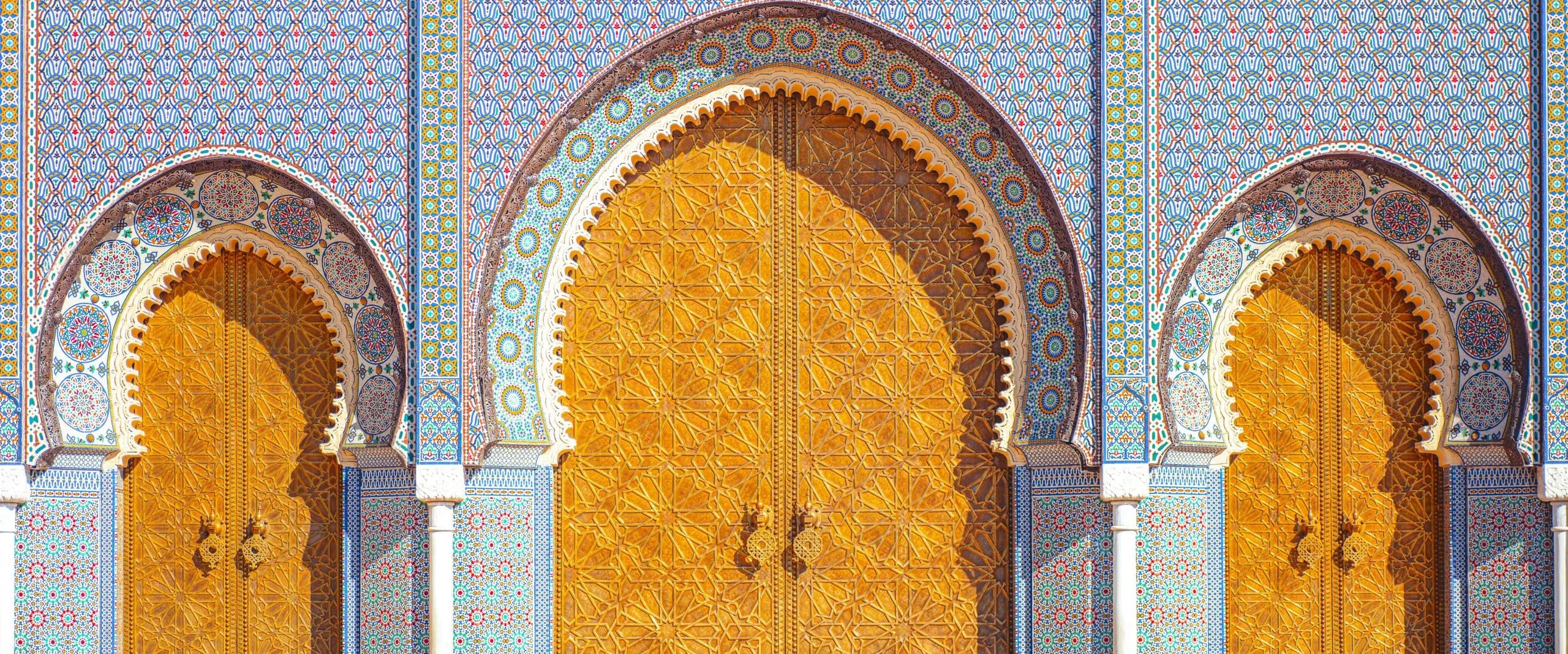
The other imperial cities each hold their signature monument. In Meknes, the eighteenth-century Bab Mansour gate frames a horseshoe arch of intricate tile and Quranic inscription. In Rabat, the twelfth-century Hassan Tower stands as an unfinished minaret beside the Mausoleum of Mohammed V, a monument to ambition cut short. These threads join naturally on a route through the country's royal capitals, the spine of our imperial cities of Morocco tour.
BEYOND THE CAPITALSCoastal walls, northern blue and the Hollywood of Africa
On the Atlantic, Essaouira turns its back to the wind behind fortified ramparts. The eighteenth-century Borj el-Barmil tower, the "Bastion Nord," looks out over crashing surf and a working fishing harbor. Further north, Tangier keeps its own eighteenth-century palace in the Marshan quarter, with opulent reception halls and a grand central courtyard that speak to the city's long role as a crossroads between Africa and Europe.
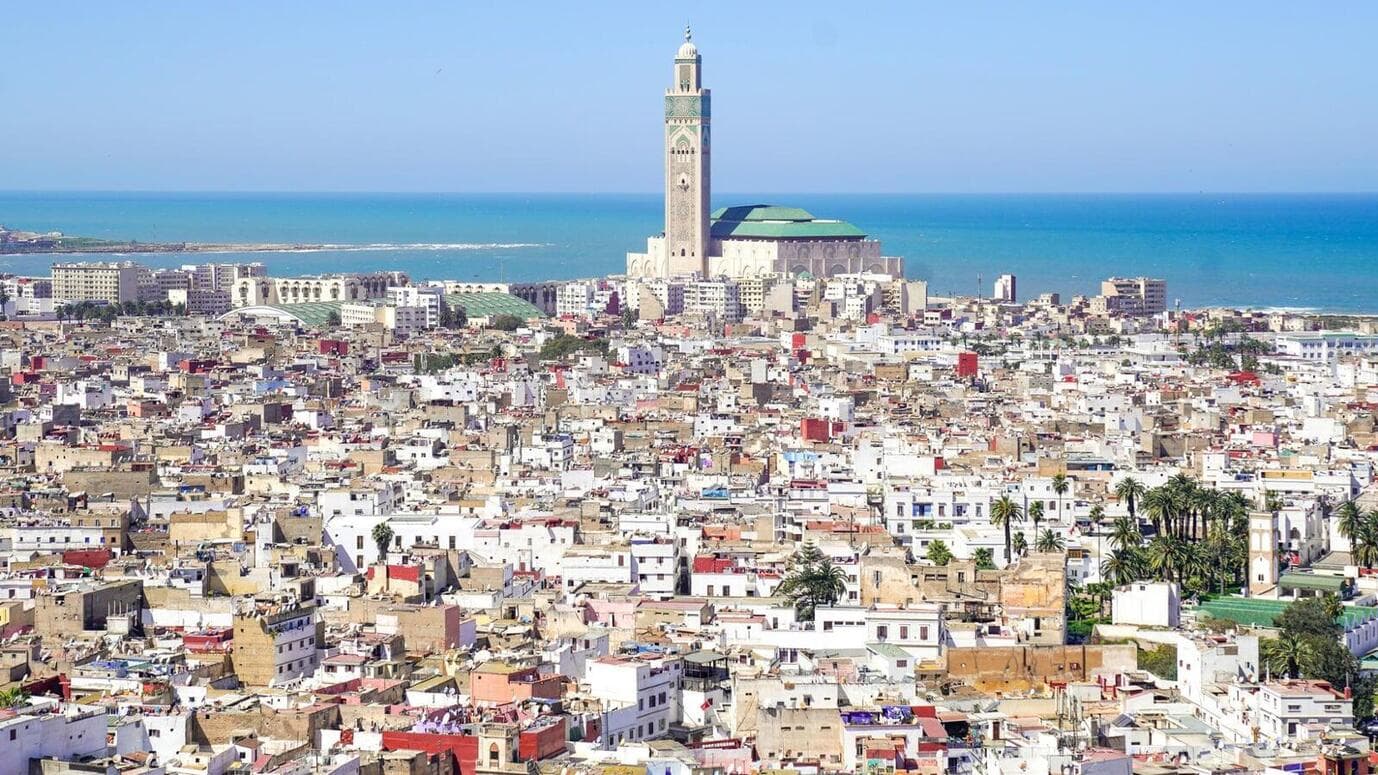
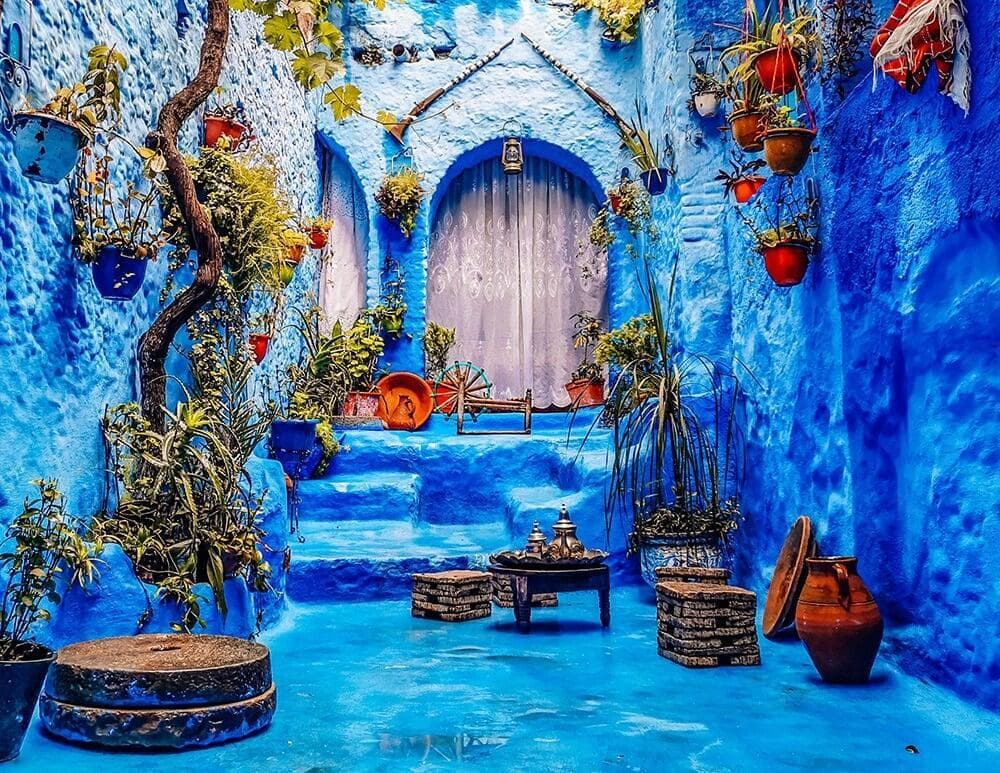
Chefchaouen sits in a register all its own. Plaza Uta el-Hammam anchors the blue city, ringed by cafés, restaurants and historic sites, while the Quartier Al Andalous winds upward in blue-washed lanes lined with boutiques and galleries. In Casablanca, the Hassan II Mosque overlooks the waterfront with a minaret soaring 689 feet above intricate tilework, marble and carved wood. The nearby Habous quarter, built in the 1930s, folds open-air souks into a blend of Moroccan and European design, and the Corniche stretches 2.2 miles along the shore. Inland, Ouarzazate earns its nickname as the "Hollywood of Africa," its deserts and kasbahs standing in for other worlds in films from Lawrence of Arabia to Game of Thrones.
ANCIENT MOROCCOArchaeological sites and monuments
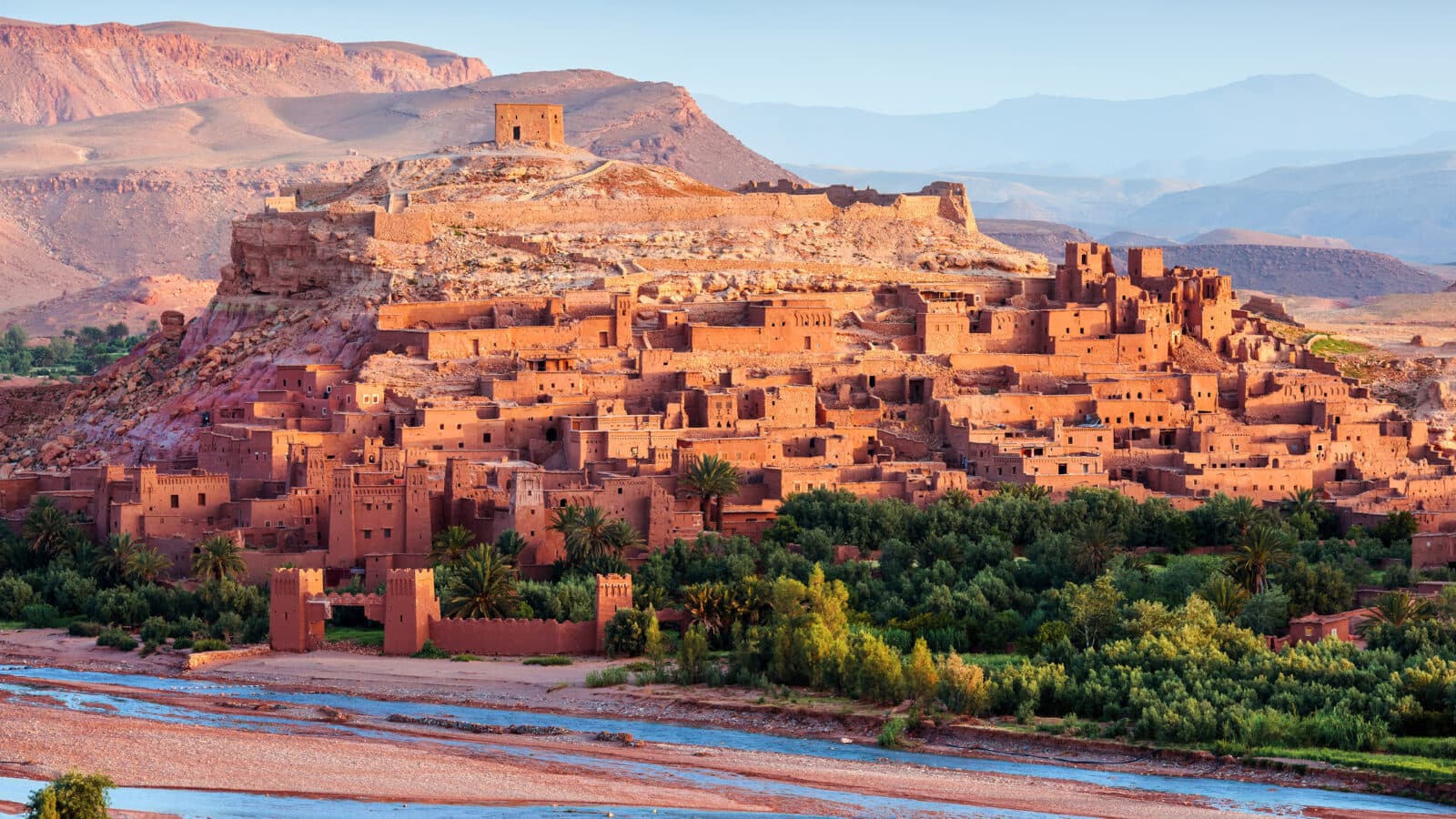
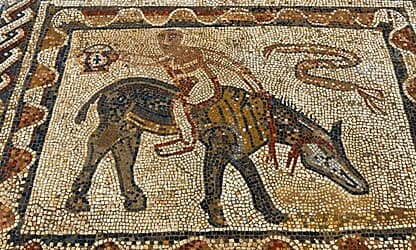
Morocco's oldest stories are written in stone. Volubilis, near Meknes, preserves the streets and public buildings of a Roman city dating back to the third century BCE. In the Atlas foothills, the UNESCO-listed Aït Benhaddou kasbah rises as a fortified village of mud-brick towers that has weathered centuries of sun. On the road through Ouarzazate, the nineteenth-century Taourirt Kasbah recalls the Glaoui family who once controlled the caravan routes and defended the region from its earthen walls.
The kasbahs continue in every direction. In Agadir, Kasbah Oufella looks out over the city and coast beside a museum of regional heritage. Tangier's fifteenth-century kasbah guards winding streets, the Museum of Moroccan Arts and the Kasbah Mosque. Rabat holds two of the country's most atmospheric sites: the twelfth-century Kasbah des Oudayas, with its Andalusian gardens and Atlantic terraces, and the Chellah Necropolis, where Roman ruins of temples, baths and a forum sit beneath medieval tombs. Essaouira's eighteenth-century Skala de la Kasbah still bristles with cannons above the waves, and in Chefchaouen the fifteenth-century Grand Mosque and Kasbah anchor the old town as living cultural landmarks.
MARKETSThe souks: Morocco's living markets
To feel the pulse of daily life, step into the souks. In Marrakech, markets such as Semmarine open into a labyrinth of spices, leather, fabrics and hand-woven carpets. In Agadir, the sprawling Souk al Had covers 22 acres of fresh produce, handicrafts, textiles, spices, rugs and ceramics. Essaouira's Souk Jdid hums inside the fortress walls with woodwork, jewelry, textiles and traditional dress.
Fes may be the most rewarding of all for the patient wanderer. Souk el-Attarine trades in spices and perfumes, Souk Seffarine has hammered copper since the ninth century, and Souk Chouara remains one of the oldest leather markets in the country. These are places to slow down, sip mint tea and let a shopkeeper explain his craft, which is exactly the kind of unhurried encounter a private guide can open for you. We fold this same sense of heritage into the broader story of the country in our Moroccan history guide.
HOW WE PLAN ITWeaving it into one journey
No single trip covers every landmark on this page, and it should not try to. The art is in the sequence: pairing Volubilis with Meknes and Fes, letting Marrakech open onto the Atlas and the desert, saving Chefchaouen and the north for a slower stretch. Travelers drawn to imperial architecture often start with our list of the most rewarding cities to visit, then read how the country's imperial grandeur gives way to the Sahara. Those who want to understand the people behind the monuments turn to our reflection on Morocco's cultural tapestry, and the adventurous map a wider loop of deserts, valleys and national parks.
Tell us which landmarks and cities call to you, and we will craft a private itinerary around them. A written proposal within 48 hours, no deposit, unlimited revisions.
Begin your journey