THE CURRENCYUnderstanding the Moroccan dirham
Morocco's official currency is the Moroccan dirham, written MAD. It is what economists call a closed currency, which means you cannot buy dirhams before you leave home. You exchange money after you arrive in Morocco, not before, and this catches many first-time visitors off guard, so it is genuinely worth knowing in advance rather than discovering it at your departure airport.
The exchange rate typically hovers around 10 to 11 dirhams per US dollar and 13 to 14 per Canadian dollar, though rates move with the markets. Check a reliable source like XE.com in the days before you travel so you land with a realistic sense of your spending power. On a private tour, most of the big costs are settled long before you arrive, which we will come to below.
GETTING DIRHAMSWhere to exchange money in Morocco
Airports and banks
The easiest place to exchange money on arrival is a currency booth inside the major airports at Casablanca, Marrakech, or Fez. Airport rates in Morocco are regulated and generally fair, often better than travelers expect from experience elsewhere, so there is no need to hunt for a better deal the moment you land. Banks in the city centers also offer competitive rates and are a dependable option during your stay.
ATMs
ATMs are widely available across Moroccan cities and most larger towns. They dispense dirhams directly and usually give solid rates, which makes them the simplest way to top up as you go. Notify your bank before you travel so your card is not flagged for foreign transactions, and expect a per-withdrawal limit of roughly 2,000 to 4,000 dirhams, so plan a slightly larger single withdrawal if you know you will want cash for the days ahead.
One habit worth keeping: avoid the currency kiosks tucked into busy souks and heavy tourist areas. Their rates are often unfavorable and the exchange itself can feel rushed and stressful, which is exactly the mood a good trip should not have.
PLANNING YOUR SPENDHow much cash do you actually need
Morocco is still a largely cash-based economy, especially away from major hotels and upscale restaurants. Credit cards are accepted at many riads, fine-dining rooms, and larger shops, but smaller vendors, market stalls, and rural areas will expect cash, and the deeper you travel into the countryside the truer that becomes.
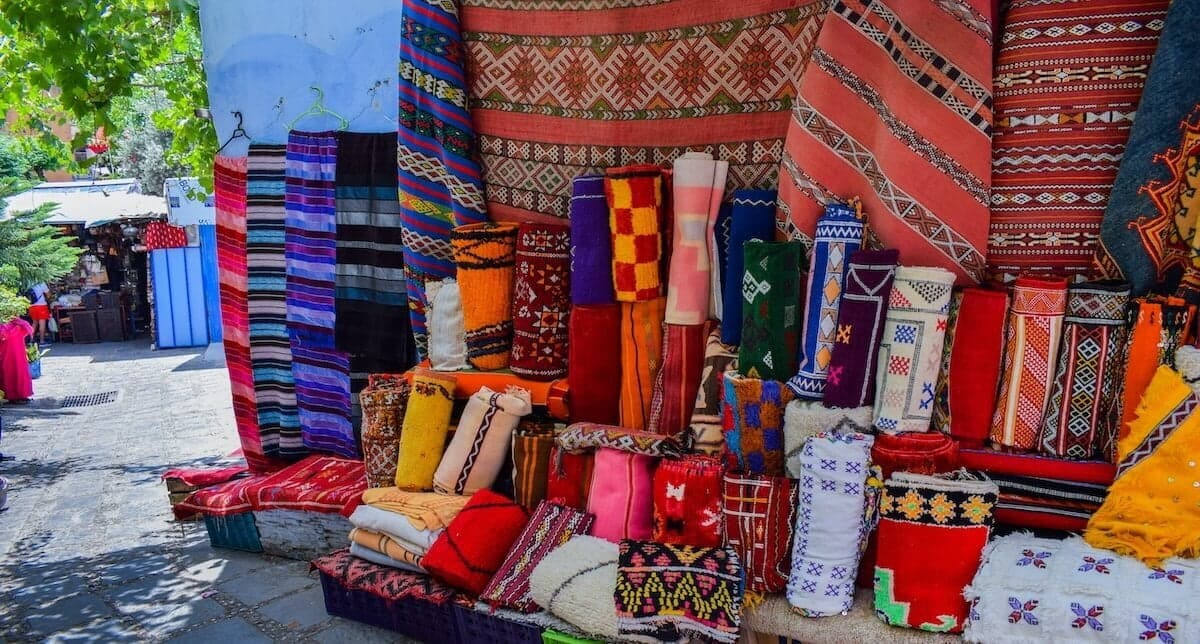
On a tailor-made Morocco tour with us, your major expenses, including accommodation, transportation, and guided experiences, are settled in advance as part of your custom itinerary. That leaves your day-to-day cash for personal spending: a rug or a lantern in the medina, tips, snacks, and small purchases along the road. A modest daily cash budget stretches a long way, and how far depends mostly on how much you plan to shop. If you would like to see the shape of a full journey, our Discover Morocco tour is a good example, and you can browse the wider range of private Morocco tours alongside it.
GRATUITIESTipping in Morocco: what is expected
Tipping is an important part of Moroccan culture and a meaningful way to show appreciation for good service. Nothing about it needs to feel awkward. These general figures give luxury travelers a comfortable starting point.
- Licensed tour guides: 100 to 200 dirhams per day is respectful for a knowledgeable private guide
- Private drivers: 50 to 100 dirhams per day is standard and appreciated
- Riad and hotel staff: 20 to 50 dirhams for porters or housekeeping is appropriate
- Restaurant servers: 10 to 15 percent of the bill is generous at a sit-down restaurant
Your Gateway2Morocco team is glad to advise on tipping customs specific to your itinerary, so you never feel uncertain about what is appropriate in a given moment.
SMALL HABITSA few practical tips before you go
- Keep small bills on hand. A 200-dirham note can be hard to break at a small stall or roadside cafe, so ask for smaller denominations when you exchange or withdraw
- Never exchange money with individuals on the street, however friendly or persuasive the offer. Stick to banks, official exchange offices, and ATMs
- Heading into the desert or smaller villages on your custom itinerary, stock up on cash before leaving the larger cities, since ATMs are scarce once you are rural
Money is only one piece of arriving well prepared. It helps to know how you will stay online, so read our notes on SIM cards, data, and wifi in Morocco, and to feel settled about the basics, our guide to staying safe and enjoying your trip is a reassuring read. For the practical questions travelers ask most often, our overview of common Morocco travel questions gathers them in one place.
With a little preparation, managing money in Morocco is genuinely straightforward. Set these habits before you fly, then let the logistics fade into the background and give your attention to the medinas, the desert, and the food.
A written proposal within 48 hours, with the costs laid out clearly. No deposit, unlimited revisions.
Begin your journey