The Sahara is one of those places that sounds extraordinary in theory and, in person, quietly outdoes the theory. What most people do not realize is how much of that first night depends on the way you arrive and who is guiding you. Rushed in on a shared minibus, it can feel like a checkbox. Reached slowly, on a private tour built around your own pace, it becomes the night people talk about for years. At Gateway2Morocco we have been guiding North American travelers into the dunes of Merzouga for years, and our founder, Brahim Jounh, grew up in Morocco's High Atlas. Here is what you can genuinely expect.
Getting thereThe journey in: arriving at the edge of the erg
Most travelers reach the Sahara after a scenic drive through the Draa Valley or over the High Atlas Mountains. Your private vehicle and dedicated driver handle every kilometre of it, so you arrive relaxed rather than wrung out. As the landscape shifts from rocky plateaus and palm groves to rippling sand, the anticipation builds on its own. If you are still weighing the details of when to come and what the roads are like, our guide to planning a trip to Morocco lays out the practical groundwork before you commit to dates.
You will reach the edge of Erg Chebbi, the towering dune field near Merzouga, in the late afternoon. The timing is deliberate. The light at that hour turns the sand a deep amber, and the heat of the day has softened into something comfortable rather than punishing.
Into the dunesThe camel trek and the sunset moment
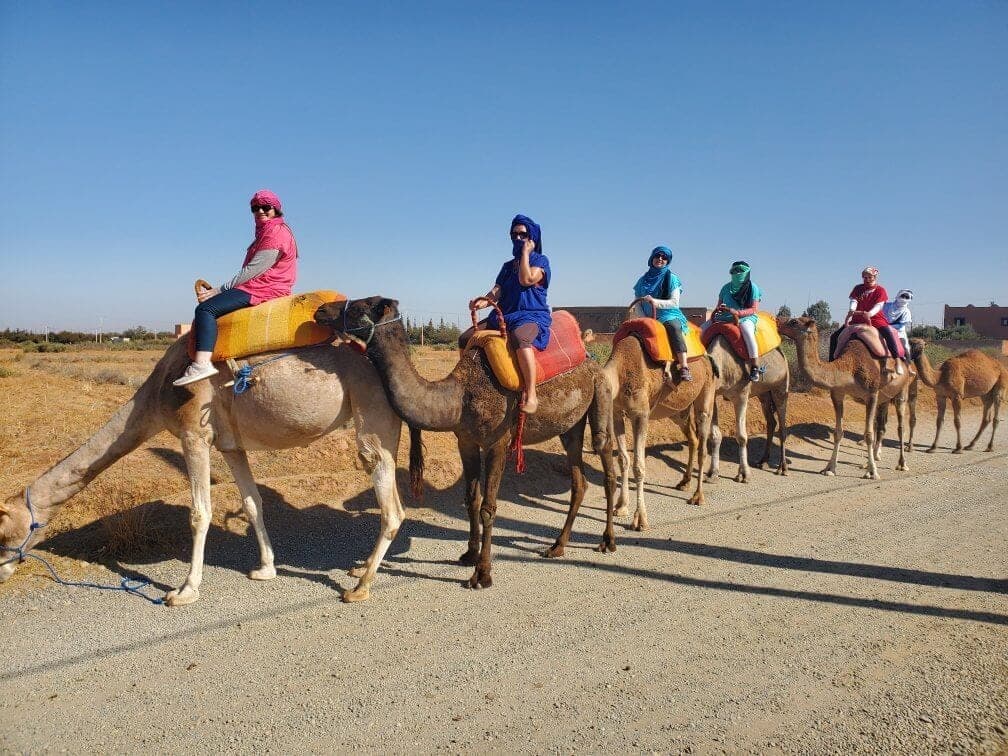
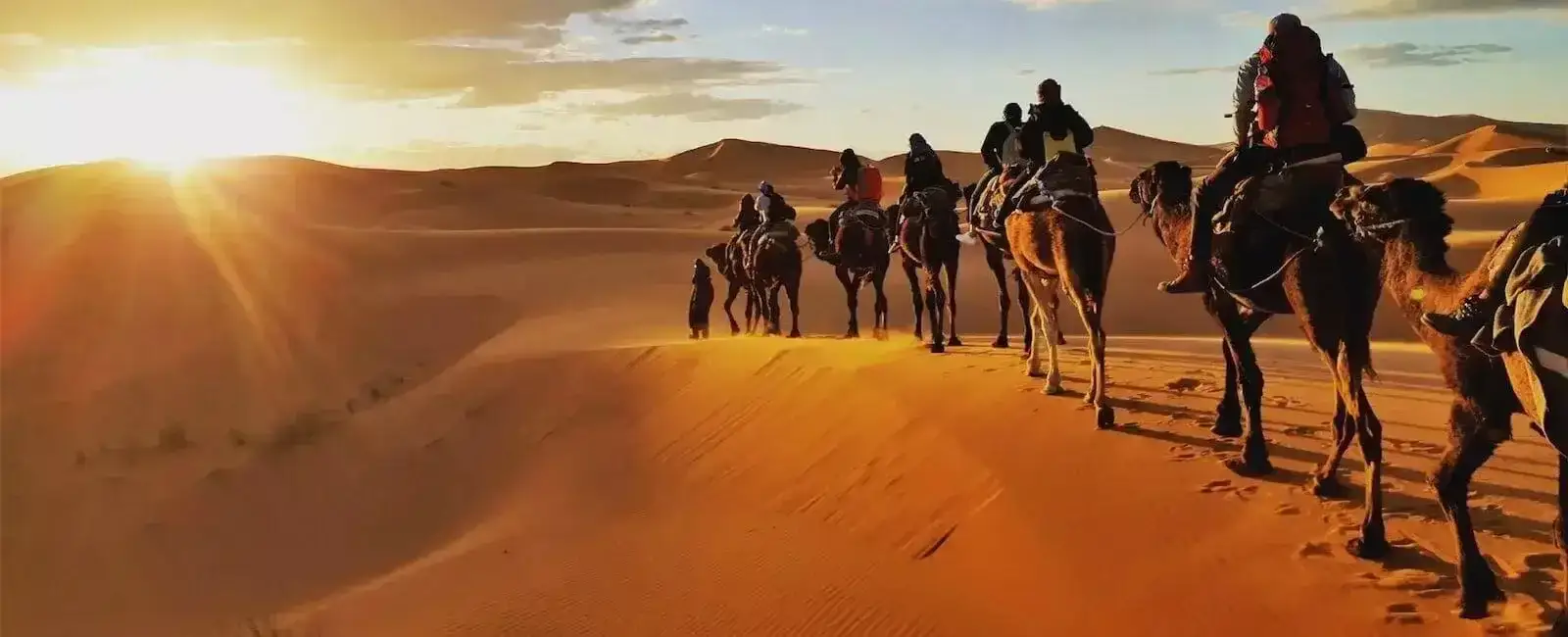
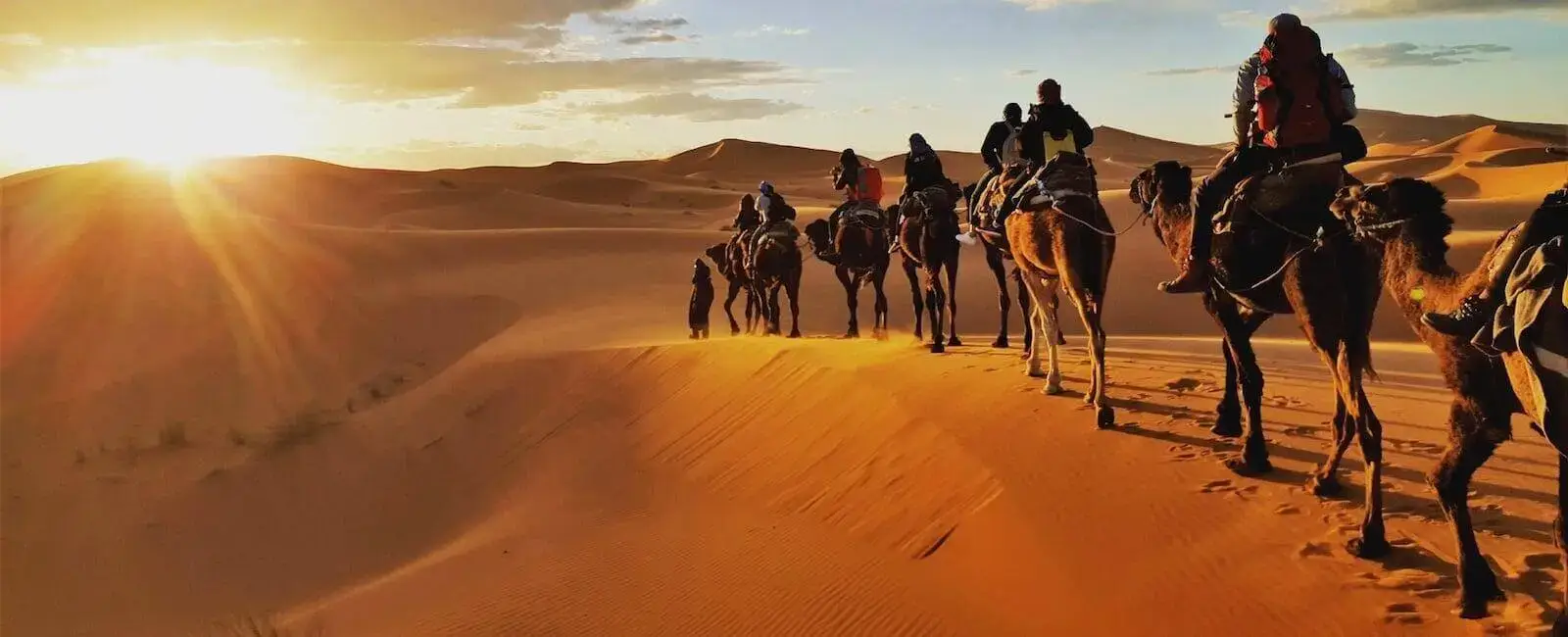
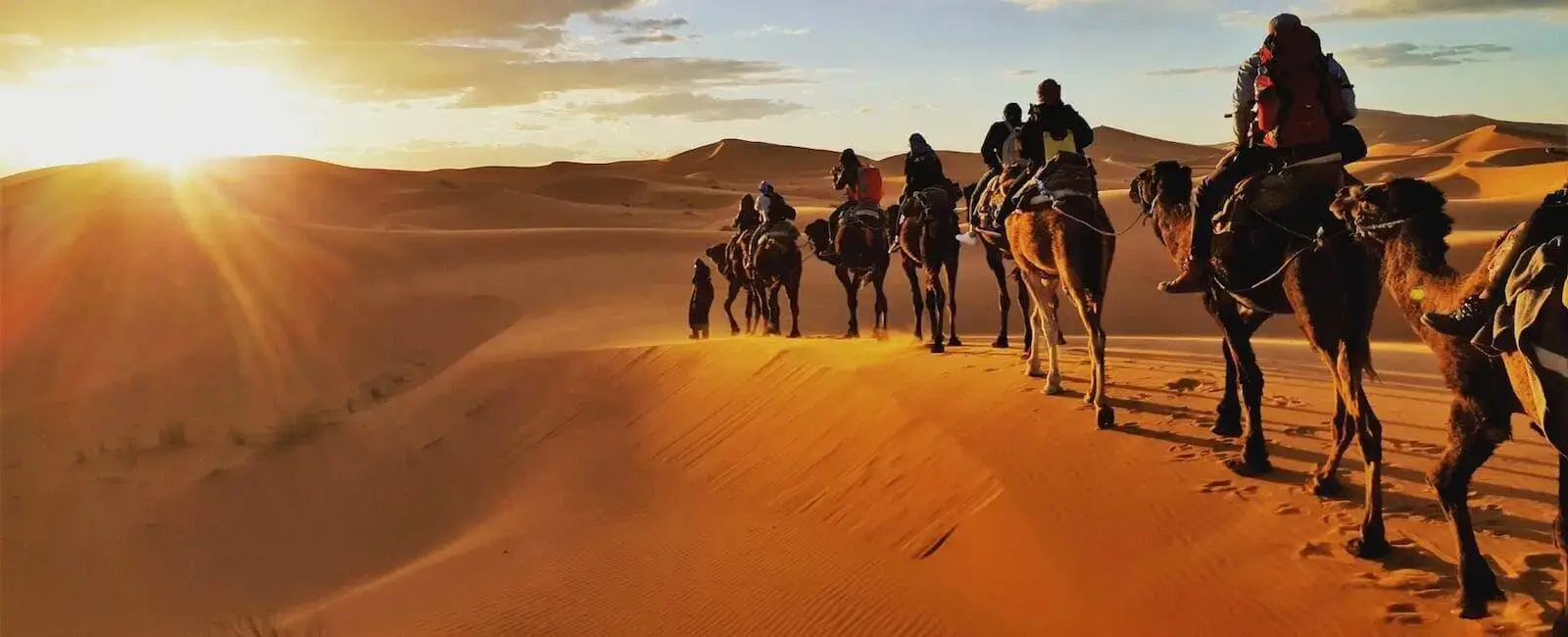
Your guide will introduce you to your camel and lead you into the dunes, on foot or by camel depending on your preference. This is not a rushed group procession. It is a quiet, private ride with only your own travel companions, moving at a pace that lets the silence settle around you. The walk in usually takes 60 to 90 minutes, timed for the long shadows and soft light that photographers travel across the world to catch.
Reaching the top of a dune at sunset is genuinely hard to describe. The horizon stretches unbroken in every direction, there is no sound except the wind, and the whole sky changes colour in the time it takes to sit down. Many of our guests tell us this single moment is the highlight of their entire Morocco journey, and it is one reason the Sahara sits at the heart of nearly every route we build, as you will see across our full range of private Sahara desert tours.
Where you sleepYour desert camp: comfort without compromise
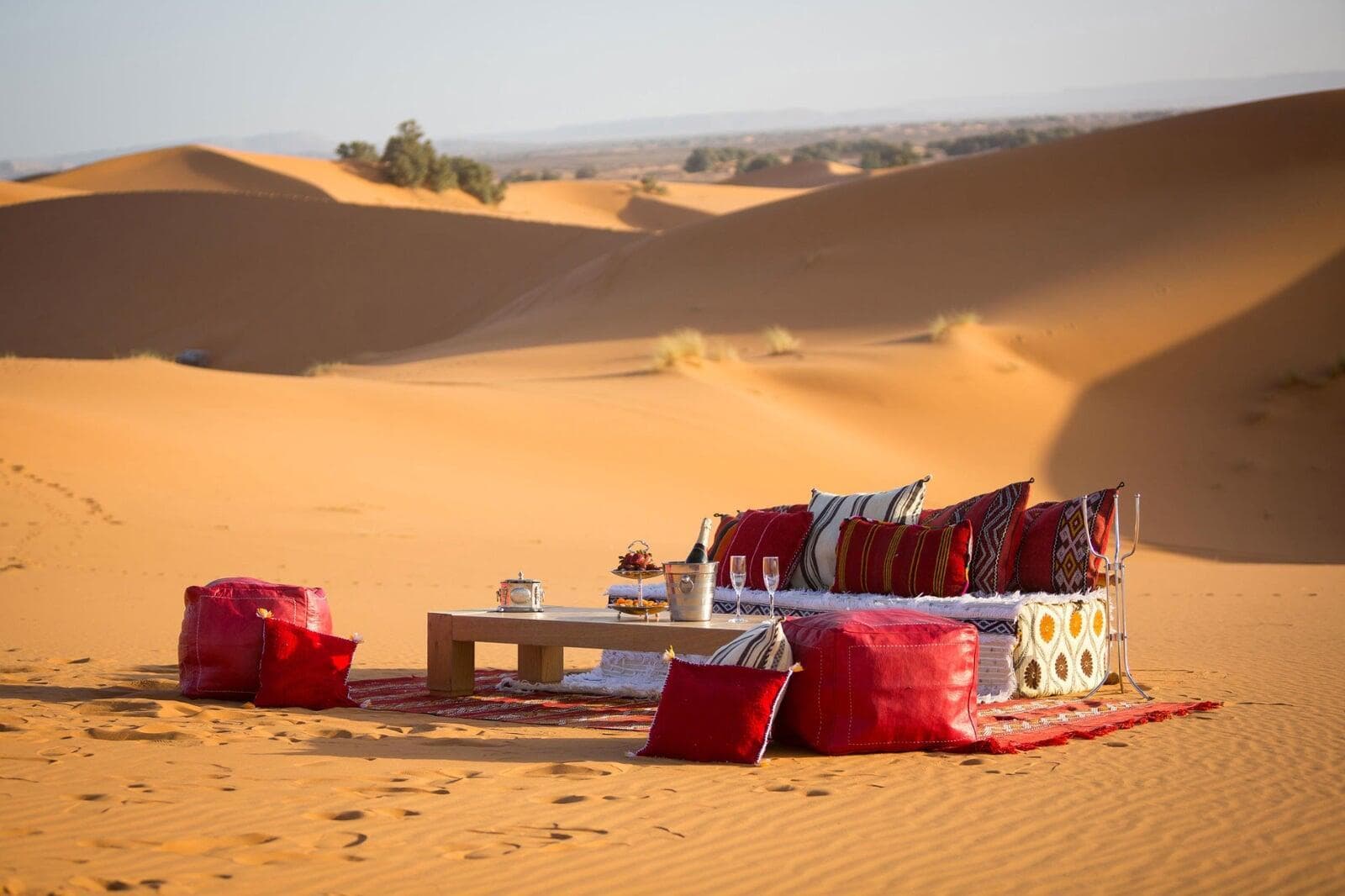
Luxury desert camps in the Sahara have come a long way. Your tent is spacious, with a real bed, quality linens, and an en-suite bathroom at the luxury tier. The camp is private and intimate rather than a large commercial operation packed with dozens of strangers, and every camp we use has been personally inspected by our team for water, sanitation, and food safety.
Dinner is served under the open sky, often with live Gnawa music from local musicians drifting across the sand. The food is fresh and thoughtfully prepared, reflecting the flavours of southern Morocco: a slow-cooked tagine, warm bread, and mint tea poured from a height. Afterward, your guide will point out constellations in a sky with almost no light pollution. It is the kind of stargazing that reminds you how rarely, at home, we ever actually look up.
What to pack for your desert night
- Desert nights are cold, even in spring and fall, so bring a warm layer or fleece.
- Sand gets into everything, so keep your camera in a bag when it is not in use.
- Comfortable closed walking shoes matter more than sandals for the dune trek.
Your guide will remind you of all of this before you set out, but it helps to arrive prepared. Because the Sahara swings from warm days to genuinely cold nights, the season you travel in shapes your packing more than anywhere else in the country. Our month-by-month guide to the best time to visit Morocco and our weather and packing guide by region both go deeper on what each month feels like in the dunes.
First lightThe morning: sunrise over the dunes
Waking before dawn to watch the sunrise from the top of a dune is entirely worth the early alarm. The colours shift from deep purple to orange to gold in a matter of minutes, the sand is cool underfoot, and the camp behind you is still asleep. It is quiet, it is stunning, and on a private tour it is yours alone rather than shared with a crowd.
After breakfast at camp, your driver meets you at the edge of the dunes and your journey continues, whether that means winding toward the kasbahs and gorges of the Draa Valley or looping back toward Fes or Marrakech. The desert is rarely the end of the trip, and the mountains you crossed on the way in reward a second look. If you have time before or after, our roundup of the best places to visit in the Atlas Mountains and our overview of private nature tours from the Atlas to the Sahara pair naturally with a desert night.
Done rightWhy private matters in the desert
The Sahara is not a place that rewards crowds or rushed schedules. A private Morocco desert tour gives you the freedom to linger on a dune when the light is good, the space to simply be present, and the guidance of someone who knows this landscape by feel. That combination is what turns a desert night from a line on an itinerary into a memory you carry home. Our Marrakech, Draa Valley and Erg Chigaga tour is one of the most complete ways to reach the wilder, more remote side of the Moroccan Sahara, and every trip we run is 100% private and holds a British Columbia Consumer Protection Licence (#80460).
“Reaching the top of a dune at sunset is the single most memorable moment of many travelers' entire Morocco journey.”— Gateway2Morocco guides, Merzouga
Tell us your dates and we will build a private Sahara itinerary around your first desert night. A written proposal within 48 hours, no deposit, unlimited revisions.
Begin your journey